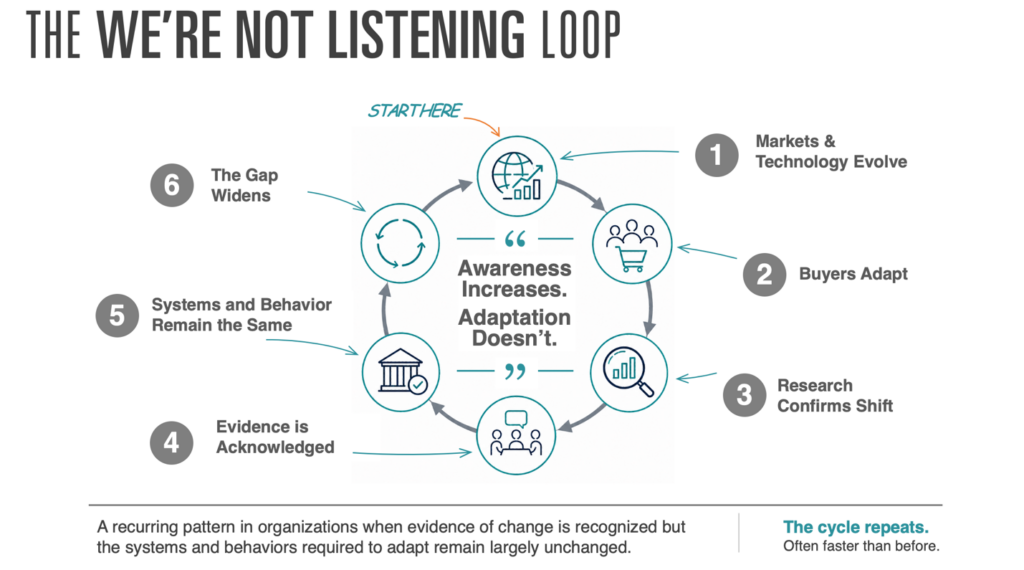
Buyers are on their own schedule and path, not yours
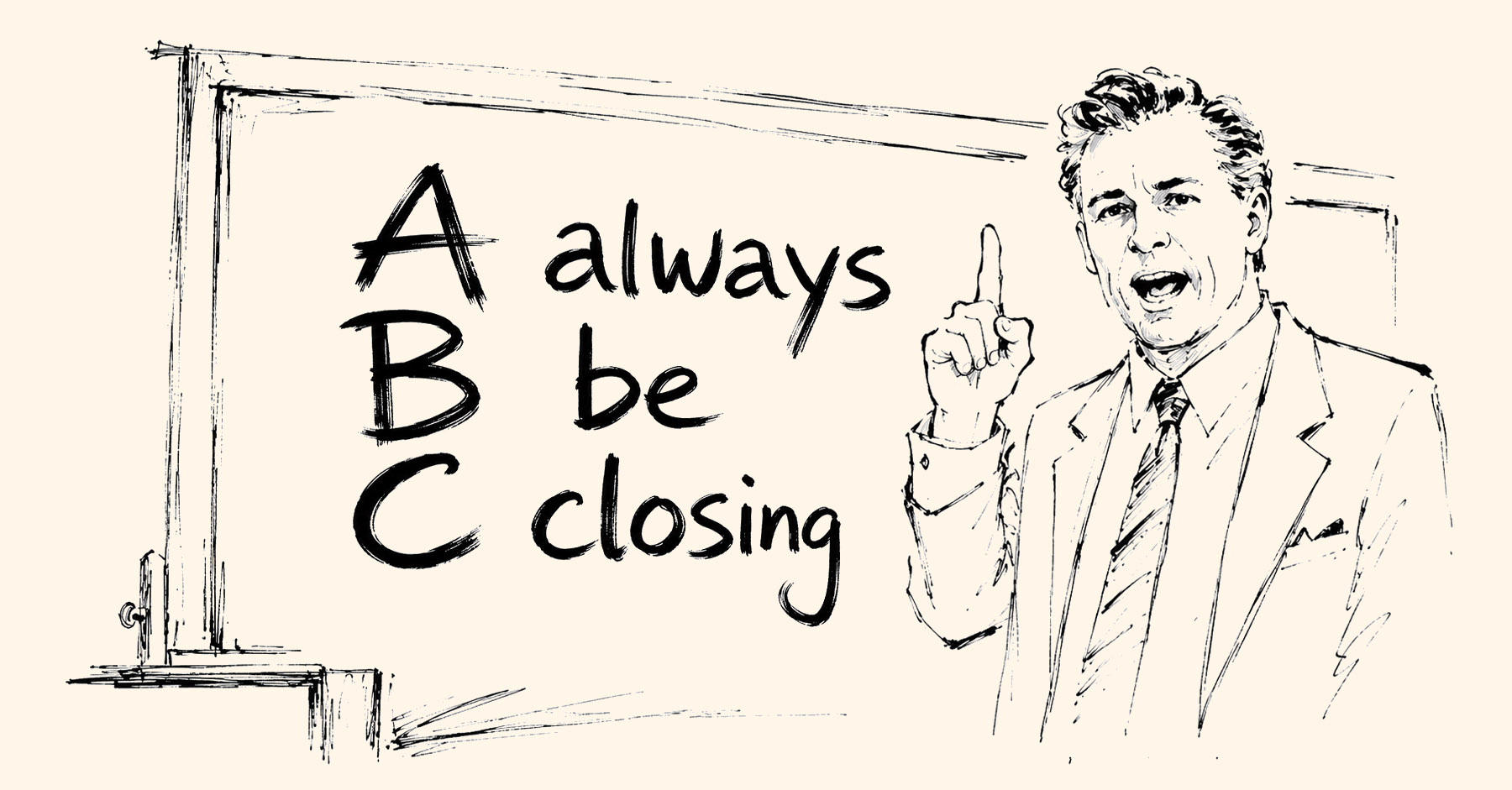
“Always Be Closing” is a well-established sales slogan that has survived for decades. On the surface, it makes sense. Businesses need sales. Deals need to close.
But closing is the result of a successful go-to-market process, not the objective of every interaction leading up to it. That distinction matters even more in marketing, because marketing cannot close buyers through a journey it does not control.
Modern B2B buyers research and make purchase decisions autonomously. They explore alternatives, consult peers, test claims and form opinions long before they are ready to speak with sales. Their purchase path is rarely linear, and most of it occurs outside the seller’s view or control.
What marketing can do is help them navigate it.
The trust tax of “always be closing”
The problem with an ABC mindset is not simply that it feels aggressive. It alters the mindset of marketing.
Instead of asking “what does a prospect want and need from each stage of the journey?” the organization begins asking “what do we need this prospect to do next? Become a lead? Book a demo? Talk to sales?”
That is the difference between buyer-focused and inside-out marketing. And the distinction shows up everywhere.
A prospect wants to understand an issue, but the content call-to-action is Book a Demo. They want to read a report the brand has prepared, but access requires contact information and placement into the MQL club. Prospects want to explore solution options and outcomes, but the vendor website is focused on “why us” and product features and promotional claims.
Individually, these may seem like minor points of friction. Collectively, they communicate something much larger:
What we need from you matters more than what you need from us.
And buyers notice.
Every inappropriate registration wall, premature CTA, overtly promotional article and persistent follow-up imposes an incremental trust tax on the relationship.
The buyer becomes a little more cautious about the next piece of content, a little less confident that advice is genuinely useful, a little more suspicious that providing information will trigger unwanted sales activity.
The cost isn’t limited to an abandoned form or ignored email — it shapes brand perception.
For companies selling complex, high-consideration solutions, that is an especially expensive trade. Buyers aren’t just evaluating features and price — they’re evaluating a vendor’s experience solving similar problems for others, whether they truly understand our unique challenges, and whether they trust the people behind the solution.
It is important to show prospects you understand their market and challenges, not just talk about it.
Help buyers progress
There is a better interpretation of ABC.
Always Be Advancing.
Advance their understanding. Give them a path to learn, compare and evaluate. Help them understand the business problem more clearly, recognize implications, consider alternatives and build internal consensus.
By helping prospects navigate their purchase path, you create the conditions in which the right buyers can comfortably move toward a sales conversation and, ultimately, a decision.
There is no universal marketing CTA. At some point, the right next step might be a demo or a conversation with sales — but rarely is it early in the process.
Sometimes the buyer needs an article, a comparison, a case study or an explanation of the process. Buyers want enough information to keep researching on their own path until they decide they are ready to be contacted.
Strategic marketing helps buyers progress. It makes those paths available without forcing buyers into a seller’s funnel. Brand trust is built on guidance, not ultimatums.
Why organizations fall into the trap
Inside-out marketing rarely begins with bad intentions. Every organization needs goals.
Sales teams have quotas. Product organizations have revenue projections. Marketing has lead goals and KPIs. All of that matters.
Larger organizations have silos and internal requests competing for attention. Smaller companies often build marketing organically, tactic by tactic, without an evolved brand strategy, defined buyer journey or content strategy.
Eventually internal culture and priorities begin driving a collection of individual tactics and random acts of marketing, driven by internal forces rather than buyer needs.
More forms. More CTAs. More follow-up. More product promotions. More pressure to meet quotas and advance prospects internally, whether they are ready or not.
The solution is not to stop marketing and selling. After all, the purpose of the business is to create and keep a customer.
But prospects control the pace, path and process that leads to becoming a customer.
Closing is not a process, it is an outcome
B2B buyers need clarity to understand complex problems, enough business value to justify solving them, and enough trust in both the solution and the seller to choose a partner and a path forward. Organizations can make that process easier or add friction to it.
The “always be closing” mindset views every interaction as a transaction and is a symptom of an inside-out marketing organization.
Buyer-centered marketing optimizes around the buyer’s needs and purchase path, treating trust as the currency that lets a buyer choose one solution over another.
One asks, “How can we move this prospect to the next KPI?”
The other asks, “How can we help this prospect move forward?”
The difference may seem subtle, but to the buyer it rarely is. And that difference compounds.
Trust isn’t earned in a single interaction. It is reinforced — or spent down — every time a prospect encounters your brand. A gated report, a premature demo CTA, a useful article, an honest comparison or a well-timed sales conversation each becomes evidence of whose interests the brand puts first.
Buyers don’t give much credit for a single moment of good behavior. They remember the pattern.
Over time, that pattern becomes part of the brand they decide whether to trust.
Closing isn’t a tactic; it is an outcome. It is the culmination of everything that came before it.